
Technology projects often begin with a platform.
A business selects an enterprise system, dashboard, automation tool, or artificial intelligence solution and then looks for ways to apply it across the organisation. Teams are asked to adopt predefined workflows, move information into standard fields, and adjust established processes to match the capabilities of the software.
This approach may simplify implementation, but it does not always improve the operation.
In complex environments, the work rarely follows a perfectly standard path. Manufacturing teams respond to changing production conditions. Warehouse teams manage exceptions in inventory and fulfilment. Field service teams make decisions away from central systems. Engineering teams rely on calculations, documents, and technical knowledge that may not fit neatly into generic software.
When technology is designed without understanding these realities, employees are left to bridge the gap.
They create spreadsheets, manual trackers, email chains, paper forms, and separate reporting processes. The official system remains in place, but the real operation begins to happen around it.
The better approach is to start with the work itself.
The Documented Process Is Not Always the Real Process
Most organisations have documented workflows.
A process map may show how an order enters the system, moves through planning, reaches production, and is eventually delivered. Responsibilities may appear clear. Systems may seem connected. Data may appear to move in a logical sequence.
The daily reality is usually more complicated.
An urgent customer request changes the schedule. A material is unavailable. A machine stops unexpectedly. A quality issue requires additional review. A planner needs information stored in another department. A supervisor makes a decision based on experience that is not recorded in the system.
These situations are not always rare exceptions. In many operations, they are a normal part of the work.
A useful system must account for how employees respond when the standard process no longer applies.
This requires more than reviewing process documentation. It requires observing the work, speaking with the people who perform it, and understanding the decisions that keep the operation moving.
Software Should Support Decisions, Not Just Transactions
Many business systems are designed to record transactions.
They capture when an order was created, how much inventory is available, which task was completed, or when a shipment left the facility.
Recording activity is important, but operational teams also need help making decisions.
A production planner does not only need to know which orders are open. The planner needs to understand which orders are at risk, why they are at risk, and what action should be taken.
A maintenance manager does not only need a list of equipment. The manager needs to know which assets require attention based on condition, criticality, operating history, and production impact.
A warehouse manager does not only need inventory quantities. The manager needs to understand whether the available materials can support the current production plan.
Systems built around real operational needs connect information to decisions.
They do not simply show what has already happened. They help employees understand what is happening now and what may happen next.
Every Operation Has Its Own Context
Two companies may manufacture similar products and still operate very differently.
They may use different equipment, planning methods, supplier networks, quality requirements, customer commitments, and organisational structures. Even facilities within the same company may follow different workflows because of local constraints.
This context matters when systems are designed.
A generic workflow may assume that each production order follows the same path. In reality, certain products may require additional inspections, specialised equipment, or different approval processes.
A standard field service platform may assume reliable internet access. Technicians working in remote environments may need offline access and a simpler mobile interface.
An inventory system may treat every item equally. The business may need to prioritise certain materials based on production criticality, lead time, or customer impact.
When these operational differences are ignored, the technology becomes less useful.
The system may contain accurate information, but it does not reflect the context needed to interpret it.
Start With the Problem, Not the Feature List
Technology discussions often focus on features.
Can the platform automate approvals? Does it include artificial intelligence? Can it generate dashboards? Does it have a mobile application? Can it integrate with the ERP system?
These are important questions, but they should come later.
The first questions should focus on the operational problem.
What decision is difficult to make today?
Where does the process slow down?
Which information is unavailable when employees need it?
Where are errors most likely to occur?
Which steps depend on manual effort?
What knowledge exists only in the minds of experienced employees?
Once the problem is understood, the organisation can determine which technical capabilities are actually required.
This prevents businesses from paying for features that do not solve a meaningful problem. It also helps development teams build simpler tools that employees are more likely to use.
Frontline Employees Hold Essential Knowledge
The people closest to the work often understand the process better than anyone else.
They know which information is unreliable. They know where delays occur. They know which system fields are ignored. They know when a standard workflow must be adjusted. They also know which workarounds have become essential.
This knowledge should shape the system.
Involving frontline employees does not mean asking them to design the technology. It means understanding the decisions, constraints, and exceptions they manage every day.
A planner may explain why two orders with the same due date cannot be treated equally. A technician may identify the information needed before arriving at a customer site. A warehouse employee may reveal that inventory accuracy depends on a manual check that is not recorded anywhere.
These insights help designers and developers build tools that support the real workflow.
They also improve adoption because employees can see that the system reflects how the operation actually functions.
Custom Does Not Always Mean Complex
Building around operational needs does not necessarily require creating an entirely new enterprise platform.
In many cases, the most effective solution is focused and practical.
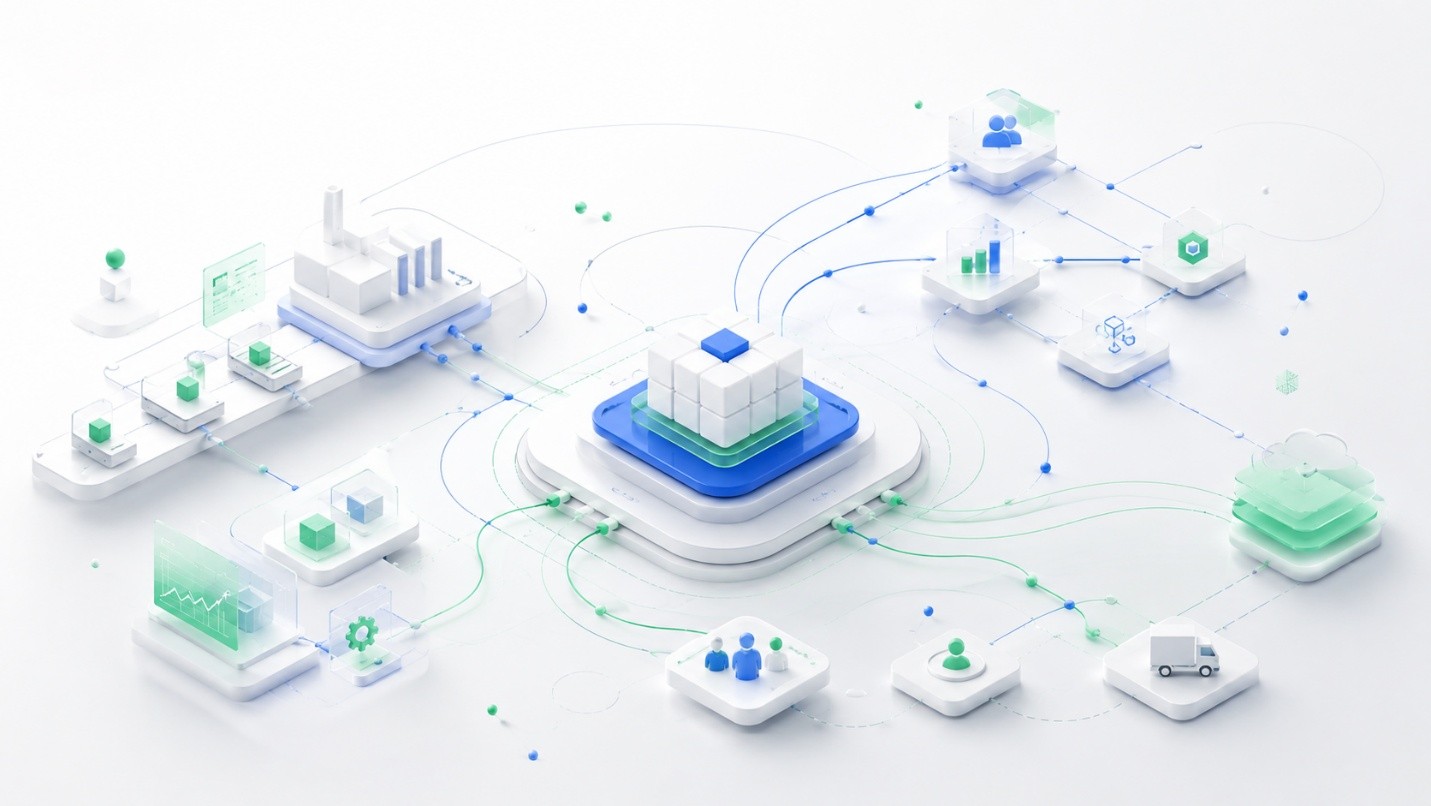
A business may need a shared planning tool that combines data from several existing systems. It may need a dashboard that highlights production risks. It may need a mobile application for field inspections. It may need an automated workflow that replaces a spreadsheet and email process.
These tools can sit alongside existing ERP, MRP, maintenance, warehouse, and customer management systems.
The original platforms continue performing the functions they handle well. The custom layer addresses the operational gaps between them.
This approach allows organisations to improve specific workflows without the cost and disruption of replacing everything.
It also creates an opportunity to test the solution, collect feedback, and expand it gradually.
Good Systems Make the Right Process Easier
A well designed operational system does more than digitise the current process.
It helps create a better one.
Before automating a workflow, organisations should determine whether every step is still necessary. A process may contain repeated approvals, duplicate data entry, unnecessary reports, or handoffs that exist only because systems are disconnected.
Automating these activities may make the process faster, but it also preserves the underlying inefficiency.
The objective should be to simplify the workflow first.
Technology can then reinforce the improved process by making information easier to access, reducing manual effort, and guiding employees toward the right action.
The best systems make the preferred way of working the easiest way of working.
Data Should Be Presented With Purpose
Operational teams are often surrounded by data.
More dashboards and reports do not automatically create better visibility. In some cases, they make it harder to identify what matters.
A system designed around real needs should present information based on the user and the decision.
An operator may need immediate alerts and simple instructions. A supervisor may need a view of current constraints and priorities. A manager may need trends, risks, and resource requirements. An executive may need a clear connection between operational performance and business outcomes.
Each user does not need access to every available metric.
They need the information that helps them act.
This principle should guide dashboard design, notifications, reports, and artificial intelligence recommendations. Every piece of information should have a clear purpose.
Adoption Is Part of the Design
A technically capable system can still fail if employees do not use it.
Low adoption is often blamed on resistance to change. Sometimes the real issue is that the system adds work, removes flexibility, or does not provide enough value to the people expected to use it.
Adoption should therefore be considered during the design process.
Does the system reduce effort?
Does it remove an existing frustration?
Can employees understand the information quickly?
Does it fit naturally into the workflow?
Can users provide feedback and correct inaccurate information?
When employees can see how the system helps them perform their work, adoption becomes easier.
Training remains important, but training cannot compensate for a tool that does not fit the operation.
Build, Learn, and Improve
Operational systems should not be treated as finished products from the moment they are launched.
Workflows change. New products are introduced. Customer expectations evolve. Data quality improves. Employees discover new ways to use the information.
A focused first release allows the organisation to validate the most important assumptions.
Are users receiving the right information? Are decisions becoming faster? Has manual work been reduced? Are the expected business results appearing?
Feedback can then guide the next stage of development.
This approach reduces implementation risk and prevents organisations from investing heavily in features before confirming that the core solution is useful.
A system that evolves with the operation is more likely to remain valuable over time.
Technology That Reflects Operational Reality
The strongest operational systems are not built around what technology can do.
They are built around what the business needs to achieve.
That requires a clear understanding of the workflow, the people involved, the decisions being made, the information required, and the constraints that shape daily performance.
Streamliners Studio combines operational expertise with data engineering, artificial intelligence, and custom software development to build tools around these real requirements.
Rather than beginning with a predefined product, Streamliners Studio begins with the operational challenge. The team works to understand how the process functions, where information becomes disconnected, and which decisions need stronger support.
The resulting solutions may include custom cloud applications, operational dashboards, mobile tools, legacy system integrations, predictive models, workflow automation, or private artificial intelligence systems.
Each solution is designed to work with the organisation’s existing technology and support the people responsible for delivering results.
Generic software can provide the foundation. But when the operation depends on specialised workflows, complex decisions, and years of practical knowledge, the final system must reflect the reality of the work.
Streamliners Studio helps organisations build that missing layer.
Discover how Streamliners Studio can turn complex operational requirements into practical digital systems that improve visibility, decision making, and performance.